
By Frida Andersson
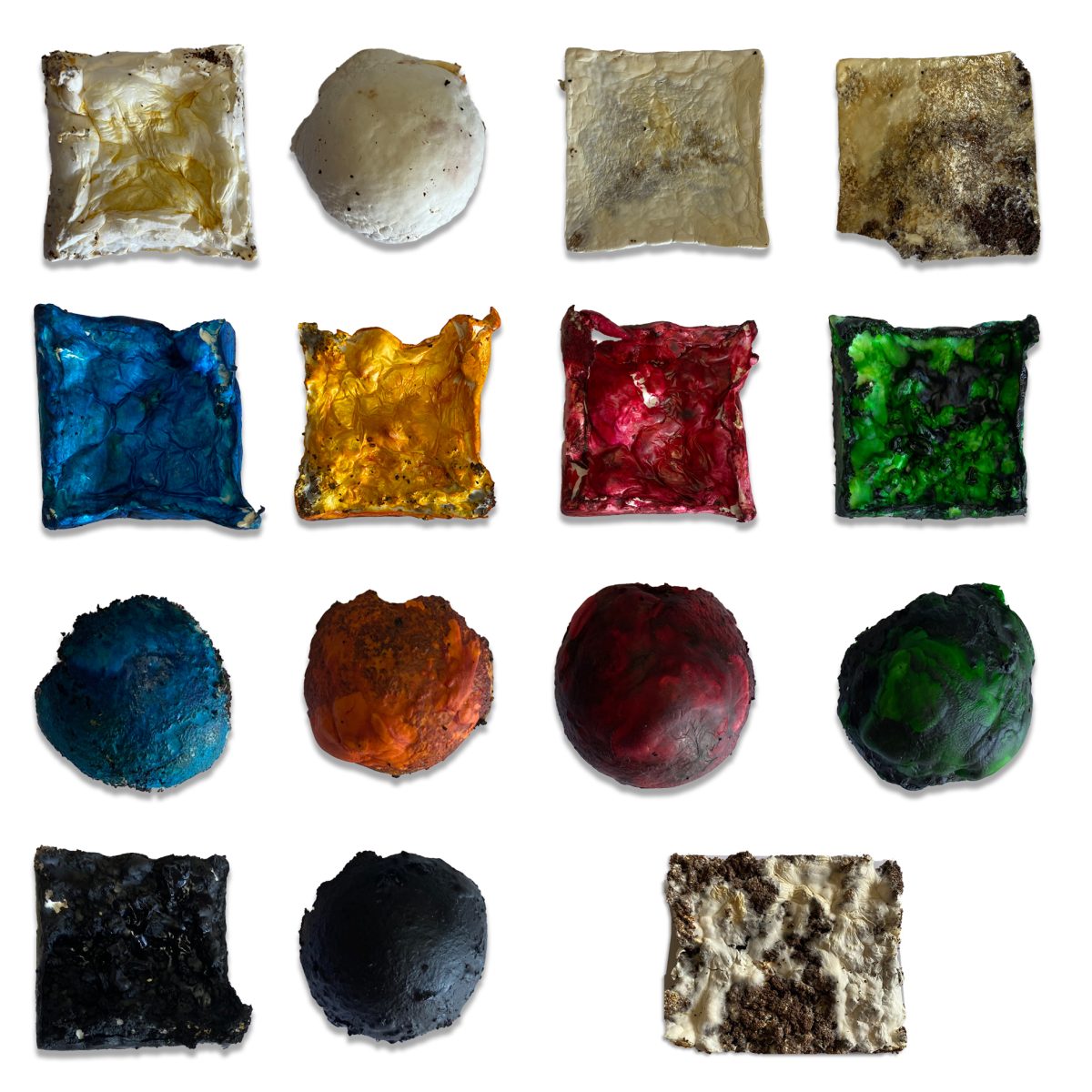
Mycelium-composites has been emerging commercially as an environmentally sustainable alternative to conventional materials. Mycelium also has the potential to further contribute to creating more sustainable options in material selection for product designers. However, the visual appearance of mycelium-materials might pose a challenge when it comes to their adaption into society. Case-studies have indicated a negative reaction to the mycelium-composites aesthetics which are characterized by imperfections and irregularities with an off-white coloring. Using theories surrounding aesthetics, materials experience and emotional design, the purpose of this study was to further develop and examine the feasibility and effectiveness of different methods for improving the visual appearance and materials experience of mycelium-based composites through a material driven design process.